

Support Change
The problems homeowners face are not isolated incidents. Across Scotland, many people encounter the same patterns: unclear charges, weak transparency, disputed liabilities, poor communication, and difficulty challenging decisions that affect their homes and finances. Support Reform exists to make clear that these are not just private frustrations. They are part of a wider problem that demands serious attention and meaningful change.
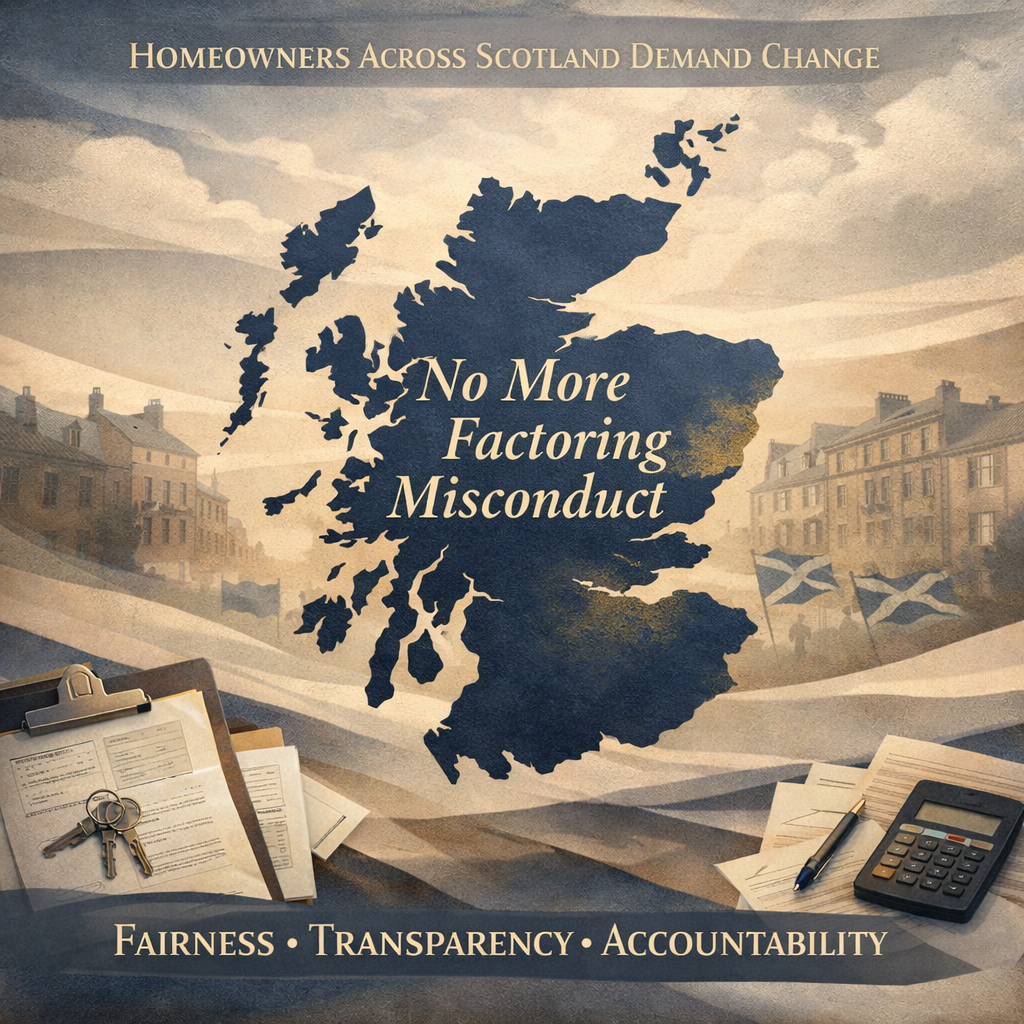
These are not just isolated disputes
When the same problems arise again and again — from vague bills and weak explanations to disputed liabilities and poor complaint handling — it becomes clear that the issue is not only individual. It is structural. Many homeowners feel isolated when dealing with their factor, but repeated experiences across Scotland suggest a much wider need for change.
Unclear Charges
Homeowners should not be expected to pay first and ask questions later. Bills should be clear, properly described, and capable of being explained.
Weak Transparency
Charges, decisions, contracts, and responsibilities are too often difficult to understand or challenge, leaving owners in the dark.
Poor Accountability
A system cannot be fair if homeowners are routinely dismissed, ignored, or pressured without meaningful explanation or redress.
What homeowners across Scotland should be able to expect
Clearer Rights and Responsibilities
Homeowners should be able to understand what they are responsible for, what a factor may charge for, and where the legal limits of that authority begin and end.
Stronger Transparency in Billing
Bills should be properly itemised, linked to identifiable work or services, and backed by enough information for homeowners to understand what they are being asked to pay.
Better Complaint Handling
Complaints should not be met with vague replies, delay, or dismissive responses. Homeowners deserve proper engagement and meaningful answers.
Real Accountability
Reform should help ensure that where factors act improperly, fail to explain charges, or disregard their duties, homeowners are not left without an effective remedy.
One homeowner can be dismissed. Thousands cannot.
One of the greatest weaknesses in the present system is isolation. Individual homeowners often feel they are dealing with a private problem when in fact many others are facing the same patterns. When those experiences are brought together, they form a clearer picture of the wider issue and a stronger case for reform.
Share patterns
Repeated stories help show that the issue is not confined to one development, one block, or one disagreement.
Strengthen public understanding
The more clearly these experiences are documented, the harder it becomes to dismiss them as isolated complaints.
Build pressure for change
A national pattern of lived experience creates a stronger basis for reform than individual frustration faced in silence.
Practical ways to stand behind change
Share Your Story
Personal experiences help expose wider patterns and show that homeowners across Scotland are facing many of the same problems.
Learn the Issues
Understanding rights, liabilities, and common problems helps homeowners identify where things may have gone wrong.
Use Public Resources
Good quality public-interest guidance can help homeowners ask better questions, organise evidence, and take informed next steps.
Stand With Other Homeowners
Even before a formal community space is developed, speaking out and supporting the wider call for fairness helps build collective strength.
A fairer system for homeowners across Scotland
Reform is not about hostility for its own sake. It is about creating a system in which homeowners are treated fairly, charges are explained properly, responsibilities are clear, complaints are handled seriously, and accountability is real rather than nominal.
Support the call for fairness, transparency, and reform
Change is more likely when homeowners speak out, share knowledge, and stand together. Support the wider call for reform by adding your voice, exploring the guidance, and helping expose the patterns that too many people are facing.