

Your Title Deeds Matter
For homeowners in Scotland, title deeds are often the starting point for understanding what you own, what you may be responsible for, and what a property factor can properly ask you to pay for.
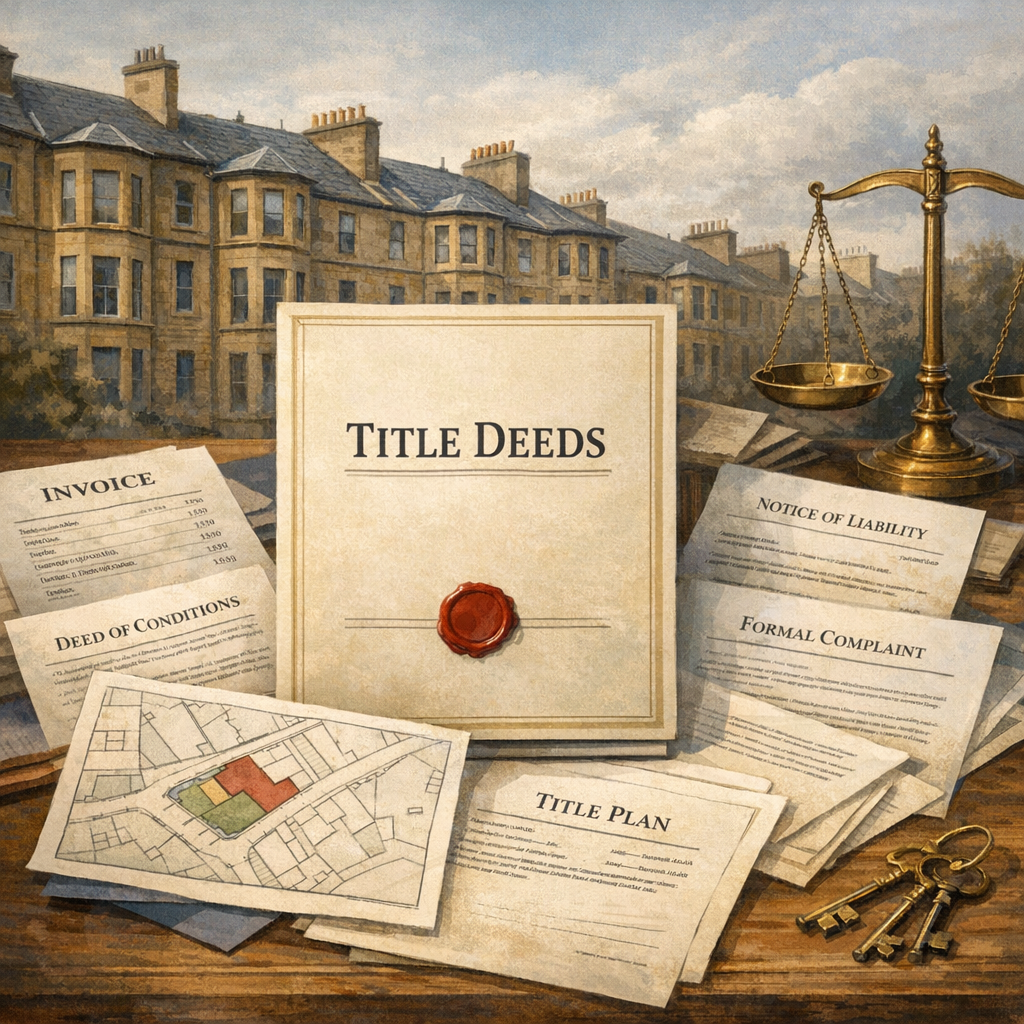
Why title deeds are so important
Many homeowners feel pressured to accept charges, repairs, insurance demands, or factoring decisions without first checking whether those demands are actually supported by their legal title. That is a mistake. Your title deeds are not just old paperwork. They can be central to understanding liability, ownership, common repairs, insurance obligations, and what you can properly be charged for.
Many disputes with factors come down to questions such as what parts of a building are owned in common, who is liable for common repairs, whether a cost should be shared at all, whether a bill relates to your own block or to somewhere else, and whether a factor is relying on title deed provisions, default rules, or neither. If a factor cannot clearly show the basis for a charge, that should immediately raise questions.
What your title deeds may tell you
Your title deeds may contain important information about the extent of your property, boundaries, associated rights, common areas, maintenance responsibilities, repair burdens, insurance obligations, decision-making rules, and any manager burdens or factoring arrangements.
This is why title deeds matter so much. They can help show whether a cost is properly yours, partly yours, or not yours at all.
Title deeds come before assumptions
A factor may sometimes speak as if liability is obvious. It often is not. The legal position usually starts with the title deeds. If the deeds already deal with ownership, repairs, insurance, or management, those provisions may be crucial.
A factor should not simply skip over the title deeds and jump straight to general assumptions about shared liability. If the deeds already make provision, that should be examined carefully.
If the deeds are silent, default rules may apply
Sometimes title deeds are clear. Sometimes they are not. Where there is a gap, default statutory rules may apply. That does not mean a factor has a free hand. It means the deeds should be checked first, and only then should any default legal rules be considered.
A factor should be able to explain whether it is relying on the deeds, on default statutory rules, or on both. Homeowners should not simply accept broad or careless statements without a proper explanation.
Common repairs and shared liability
When dealing with common repairs, the important question is not simply whether work was done. The real questions are whether the work was done to a common part you are actually liable for, what part of the title deeds supports that liability, whether any default rule is being relied on, and how your share has been calculated.
These are basic questions, not unreasonable ones. Homeowners should not feel pushed into paying for work without understanding why they are said to be liable for it.
Title deeds and factoring powers are not the same thing
A factor manages property, but that does not mean a factor can create legal liability out of thin air. Administrative convenience is not the same as legal entitlement. A factor may organise work, issue invoices, communicate with owners, and administer common arrangements, but the legal basis for those actions still matters.
In simple terms, a factor’s role does not replace the underlying legal framework created by ownership rights, title burdens, and any applicable default rules.
Insurance should also be checked against the deeds
Insurance is another area where title deeds can matter greatly. If a factor is billing for insurance, homeowners should understand what is being insured, who is insured, and the legal basis on which the cost is being shared.
If insurance is in dispute, homeowners should ask not only for the policy details, but also how the factor says the policy and cost allocation fit the legal title position.
Your factor should be able to explain the basis of charges
If a factor says you owe money, it should be able to explain what the work was, where it was done, why you are liable, how your share was calculated, whether the legal basis is the title deeds or some other rule, and what evidence supports the charge.
Homeowners are entitled to clearer information than vague assertions, unexplained liabilities, or opaque billing.
What to look for in your title documents
The property section
This may describe the property itself and any associated rights.
The burdens section
This is especially important, as it may contain obligations relating to maintenance, common areas, and shared costs.
Any deeds of conditions
Older burdens and shared responsibilities may be set out in related deed documents.
The title plan
This can help clarify the extent and boundaries of the property.
Warning signs that need closer scrutiny
What you should do in practice
The key point
Your title deeds are not a side issue. They are often the foundation for understanding ownership, common responsibilities, burdens, and the basis of many charges a factor may seek to recover.
If you do not understand what your deeds say, you may not fully understand what you truly owe, what you do not owe, and when a factor may be going beyond proper authority.
Start with the legal documents that govern your property.
Before accepting liability, before paying disputed charges, and before assuming that a factor’s interpretation is correct, begin with your title deeds.